
Trade unions have called for a nation-wide strike on September 2.

Declining interest rates, a near-normal monsoon leading to higher rural incomes and pay hikes for central government employees are key triggers, says Dev Chatterjee.

The industry also emphasised on supply-side interventions by the government to tackle persistently high food inflation.

India's pharmaceuticals and medical devices industries are still hopeful that trade negotiations with the US could cut a fairer deal for both sides, after President Donald Trump announced a 25 per cent tariff rate on India on a social networking platform without divulging the finer details.

The Congress party has distanced itself from Shashi Tharoor's remarks praising BJP leader L.K. Advani, stating that Tharoor speaks for himself and that his continued membership in the CWC reflects the party's democratic spirit.

Inflation dipped to a five-month low of 5.19 per cent in July mainly on account of decline in prices of some food articles, vegetables and protein rich items.
Industry bodies said the decisions will help attract much-needed capital, create jobs, encourage collaboration and benefit cash-starved small and medium enterprises.

The survey revealed that unethical behaviour still persists, with a majority of respondents justifying unfair actions undertaken to survive the economic downturn.

Many corporate figures, who are not full-fledged businessmen, have felt the need to make a change in the system. That's why they are joining the AAP, Captain Gopinath tells Rediff.com's Vicky Nanjappa

iPhone maker tells Delhi HC the antitrust watchdog has no jurisdiction to consider its global turnover.

State-owned Oil and Natural Gas Corporation (ONGC) has reported a 10 per cent decline in its June quarter net profit on lower oil prices and stagnant production from its aging fields. The company reported a net profit of Rs 8,024 crore in the first quarter of 2025-26 fiscal year, compared to Rs 8,938 crore earning in the same period last year, a company statement said.

Besides the pandemic that resulted in higher interest rates, the default by Future Retail has dealt a blow to investor sentiment.

Corporate India is indicating cautious hiring in the March quarter of 2023 as concerns rise over possible recession and steady inflation, a survey said on Thursday. According to the ManpowerGroup Employment Outlook Survey, based on interviews with nearly 3,030 public and private employers, hiring intentions will decrease in the quarter both on year-on-year and quarter-on-quarter basis. During the quarter, 48 per cent employers expect to increase their staffing levels, 16 per cent anticipate a decrease in hiring intent and 34 per cent do not anticipate any change in hiring, resulting in a net employment outlook of 32 per cent.

For debt-laden companies, asset sales is an obvious solution.

India Inc has expressed strong displeasure over the Delhi government's decision to withdraw approval to FDI in multi-brand retail, saying the move was likely to hinder foreign investments flowing into the country.

In order to boost growth amid some softening of inflation, RBI earlier this month cut the key interest rate by 0.25 per cent. It is scheduled to announce its mid-quarter policy review on June 17.

Reversing a six month declining trend, WPI inflation moved up marginally to 0.11 per cent in December mainly because of increase in prices of food items.

Foreign banks and private credit funds are queuing up to fund acquisitions by Indian companies who are buying out their local rivals. The Adani Group, Torrent Group, and the Hindujas have approached several foreign banks and private equity (PE) firms to fund their acquisitions. Global investors have about $2 trillion of funds to invest, and about $100 to $150 billion is set aside for India, according to an estimate by JP Morgan.

144 companies will pay Rs 61,087 crore in equity dividends to their shareholders for FY16, an increase of 19.2 per cent year-on-year

India Inc needs to tighten norms against sexual harassment at work.

Around 67 per cent respondents see the rupee to be at or below 60 for FY'15.

More than a third of 83 mainboard IPOs this year ended their debut sessions in the red, with losses of up to 35 per cent.

Emphasising that revival of growth should be the number one priority of the RBI at this time, industry groups said apprehensions about inflation rearing its head again may prove to be misplaced.

Mumbai collected Rs 17,174 crore of advance taxes against Rs 7,356 crore in the same period last year. The tax authorities believe that such a staggering growth rate is a positive sign for the economy.

To shield against US President Donald Trump's tariff shock, analysts have been advising investors to focus on stocks of domestic-oriented companies, rather than export-centric ones, to minimise potential losses.

Equity investors should thank cash-rich biggies such as TCS, ITC, HUL, Nestl, and Bajaj Auto for this.

83% of the CEOS plan to hire more in the new year.

Terming the rise in October retail inflation despite a bumper crop as "disturbing", India Inc said the government must immediately address supply side bottlenecks to bring down the consumer price inflation.

The handsome 25 per cent rise in corporate profits in the September quarter amid a sharp contraction in GDP was on the back of wage squeezes, leading to rise in inequalities in India, economist Nouriel Roubini said on Thursday. This rising inequality is "dangerous" politically and socially because only a few people in the economy are benefitting, the economics professor at New York's Stern School of Business said. Roubini said earnings of listed entities have risen 25 per cent in the September quarter, which means that wages and income are getting "squeezed, if not collapsed".

While salary growth may range from a marginally positive to stagnant or even negative, the increment for some of the "super-specialised" profiles can go beyond 15%.
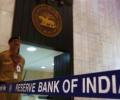
The status quo decision came as a breather as only last week the RBI had pulled up banks for not helping it in monetary policy transmission.

The earnings are, however, expected to be down around 2 per cent on a sequential basis due to pent-up demand getting exhausted and the adverse impact of rising metals and energy prices on consumer goods and manufacturing companies.

With the dizzying rise in the number of Covid-19 cases in the country, India Inc has transitioned from a wait-and-watch policy to full-on emergency mode, bringing back remote and flexi work, stringent safety protocols, and allowing only essential travel. Companies - especially in metros like Delhi, Mumbai and Kolkata - that had adopted a hybrid work model during the last few months when the caseload remained low, are either switching back entirely to work-from-home (WFH), or calling skeletal staff to office on select days. Take the case of cigarettes-to-hotels major, ITC, which had been on a hybrid work model over the last few months.

Budget in the medium term aims to kick-start the investment cycle.

Companies, so far, were constrained by the provisions of Articles 370 and 35A, which restricted the purchase of land and hiring manpower.
China has cast a long shadow on India's economy.

India Inc is facing threat from non-traditional sources.

Corporate India raised decent fund via debt in April.

Importers are rushing to hedge their dollar positions amid the sharp depreciation of the rupee against the American currency and expectations of further volatility even as exporters are holding off after suffering mark-to-market (MTM) losses on earlier hedges.
